
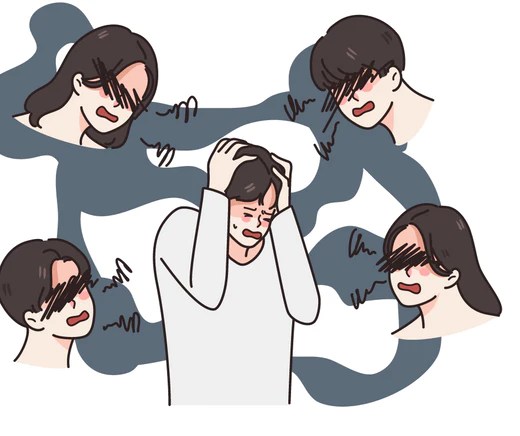
Schizophrenia is a serious mental illness/condition that affects how a person thinks, feels, and behaves. They may seem as though they have lost touch with reality. The symptoms of schizophrenia can make it difficult to participate in usual and everyday activities. Many people who recieve treatment can engage in school or work, achieve independence, and enjoy personal relationships.
Psychotic symptoms
Psychotic symptoms include changes in the way a person thinks, acts, and experiences the world. People may lose a shared sense of reality with others and experience the world in a distorted way. For some people, these symptoms come and go. For others, the symptoms become stable over time.
- Hallucinations: When a person sees, hears, smells, tastes, or feel things that are not actually there.
- Delusions: When a person has strong beliefs that are not true or may seem irrational with others. For example, May believe that people on the radio and television are sending special messages that require a certain response, or they may believe that they are in danger or others are trying to hurt them.
- Thought Disorder: When a person has ways of thinking that are unusual or illogical. People with thought disorder may have trouble organizing their thoughts and speech. Sometimes a person will stop talking in the middle of a thought, jump from topic to topic, or make up words that have no meaning.
- Movement Disorder: When a person exhibits abnormal body movements.
- Disorganized thinking (speech): Effective communication can be impaired, and answers to questions may be partially or completely unrelated.
Negative Symptoms
Negative symptoms include loss of motivation, loss of interest or enjoyment in daily activities, withdrawal from social life, difficulty showing emotions, and difficulty functioning normally. Symptoms include:
- Having trouble planning and sticking with activities, such as grocery shopping,
- Having trouble anticipating and feeling pleasure in everyday life.
- Talking in a dull voice and showing limited facial expression.
- Avoiding social interaction or interacting in socially awkward ways.
- Having very low energy and spending a lot of time in passive activities. In extreme cases, a person might stop moving or talking for a while, which is a rare condition called catatonia.
Cognitive Symptoms
Symptoms include problems with attention, concentration, and memory. It can make it hard to follow a conversation, learn new things, or remember appointments. Cognitive functioning is one of the best predictors of their day-to-day functioning.
- Having trouble processing information to make decisions.
- Having trouble using information immediately after learning it.
- Having trouble focusing or paying attention.
Assertive community treatment (ACT) is designed to help individuals with schizophrenia who are likely to experience multiple hospitalizations or homelessness.
 Mental Stregnth For Life
Leave a comment